

Here we go with a brewing method, blog series. Starting with one of the quickest and easiest ways to brew coffee at home - the Hario V60 pour-over!
Whether you’ve recently been gifted a V60 or you have one gathering dust in a cupboard, we’re here to help you get the best out of this simple but mighty brewer. In this blog, we’ll explain a bit about how the V60 coffee maker works, what you’ll need to brew coffee with one, and give you the recipe for how to brew the perfect V60 coffee at home.
What is a V60?
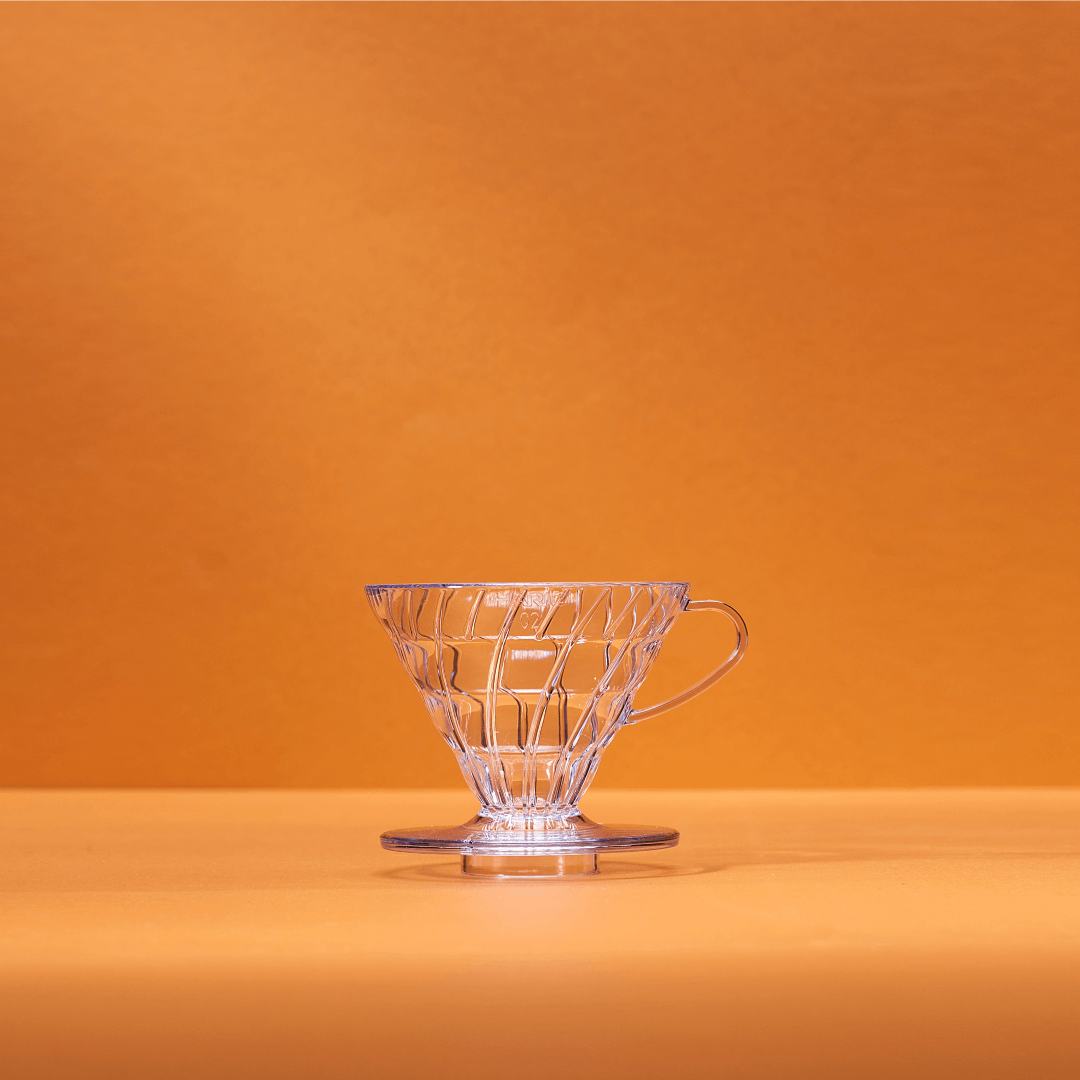
TheV60 was invented by the Japanese coffee technology company, Hario. Commercially released in 2005, the V60 was named so because of its ‘V’ shaped silhouette, and the 60° angle at which the water pours into the cup.
How does the V60 work?
The V60 usespercolation to brew a cup of coffee. The brewer itself is cone-shaped and uses a filter to hold the coffee grounds. Then hot water is poured over the grounds. Thanks to the V60’s shape, the water flows downward through the coffee grounds and through the filter paper, dripping into a mug below.
Because of these steps in the technique, V60 coffee is an example of drip filter, or conical-brew coffee. However, it is important to note that these alternate names can also refer to similar but different percolation brewers, such as theChemex orflat-bottom brewers like the Orea & Kalita Wave or Melitta.
Like the V60, these methods also brew coffee via percolation and use filter papers (or reusable metal or cloth filters). It’s worth clarifying which method is being used before selecting a filter coffee recipe. Each brewer uses slightly different grind sizes, water temperature, and doses of coffee. This produces slightly different flavour profiles.
What does V60 coffee taste like?
V60 tends to have a flavour that is often described as ‘cleaner’, ‘lighter’ or more ‘tea-like’ if you’re comparing it to immersion brewing.
Not every V60 coffee will taste the same; the flavour depends greatly on several factors. These factors include the brewing recipe, coffee freshness, the coffee itself (including origin, altitude, and roast style), and the quality and temperature of the water used.
The Coffee
Just as there’s no perfect recipe for V60 brewing, there’s no one perfect kind of coffee. That being said, for us, some non-negotiables give you the best chance of achieving a delicious brew. One of these isfreshly ground coffee. By 'fresh,' we mean grinding your coffee beans in the seconds before you brew, if you've carefully selected responsibly sourced, high-quality coffee, you'll be onto a winner!
In terms of coffee variety, this comes down to your own preference, but if you would like our recommendation, you can’t go wrong with something like a washed Ethiopian. We love this one fromDuwnacho. Technically, any coffee can be brewed in a V60, but typically the cleaner, lighter style can perfectly highlight fruitier or more floral and complex coffees. These notes are most often found in high-scoring specialty-grade arabica coffee, grown at high altitude, with a light to medium roast style, which allows the coffee's natural flavours to shine.
The dry dose of coffee required will depend on how much coffee you would like to brew, but in terms of ratios, you can’t go wrong with 1:16. This means 1 gram of coffee for every 16 grams of water. This is generally considered the golden ratio and is the go-to for pourover brewing, though, as with most aspects of this brewing guide, we recommend this as a starting point for you to then tweak to perfection and preference.
The Grind
V60grind size can vary slightly, but generally, a medium to fine grind is a great starting point. For reference, these grind sizes can be comparable to table salt or granulated sugar, or, for the true coffee geeks, a micron size of between 400 and 700. Each coffee will respond slightly differently, but you can fine-tune your grind within this bracket with aprecision grinder such asKnock orOde by Fellow.
Pro tips to help you get your grind size right.
-
If your coffee tastes sour, chances are the particles are too large, and the coffee is flowing too quickly. Therefore, not having enough coffee to water contact time to adequately extract enough of the coffee's delicious solids and soluables.
-
If your particles are too fine, this may result in an over-extracted bitter flavour.
The Water
Does water quality matter?
Of course! 98% of what you are about to consume is indeed water.
When it comes to brewing coffee, water with moderate mineral content is ideal, as excess calcium and magnesium (hard water) or a lack of them (soft water) can negatively affect the quality of your brew.
However, the alternatives, bottled water and filtered water, can incur extra costs, not to mention the plastic waste!If you can invest in a water filter, we’d highly recommend it to eliminate any volatile flavours from tap water, like chlorine. But if it's not possible, don’t panic; you can still make a great quality brew by controlling all of the other variables.
How much water do I need?
Remember that 1:16 ratio?! For a V60 02, we'd recommend starting with 30g of coffee and using 480ml of filtered water.
What temperature of water do I need?
Ok, we're a bit pedantic, but water temperature can greatly affect the taste of your coffee. If the water is too hot, it may give a harsh, bitter flavour, while water that’s too cold can result in a sour brew.
The ideal water temperaturecan be achieved with accuracy using a temperature gauge or a temperature-controlled kettle, while a standard kettle requires some guesswork. Generally speaking, a few seconds off the boil will give you a decent result.
If you're decanting into a pouring kettle, chances are you'll have reduced the temperature slightly and scientifically nailed the temperature for a light to medium roast to be circa 93°C, you're good to go!
The Filter
Generally, paper filters are used; however, reusable metal and cloth filters are an option if you prefer to have less paper production, waste, and expense.
Paper filters are available in bleached or unbleached formats or even in fun, limited edition shapes.
The main rule of thumb here is to wet your filter once placed in the V60 and discard the water. This warms the brewer and the receptacle and is widely believed to also remove papery flavours that may add a negative note to your brewed coffee.
The Recipe
The recipe you use will have noticeable effects on the flavour of your coffee. Some may add a fuller body, while others may enhance the coffee's natural sweetness. We’re sharing our favourite below to get you started, but it’s worth testing out your own recipes and tweaking one element at a time to perfect your brews of different coffees over time.
The Pour
This is why it's called the 'pour over,' and your technique can make or break your brew. The main principles of pouring are to evenly saturate the coffee grinds with water whilst controlling the flow rate, creating agitation, and allowing a balanced flavour release. Easy right?!
Here's how: Wet your filter and discard the water. After adding your coffee, pour a 30-50ml 'bloom' (allowing the coffee to degas) and then control 2-3 doses of water poured in a concentric circular motion, resulting in a 3-5 minute total brew time.
What you’ll need to brew V60 coffee
Now that we’ve covered the basics of brewing, let’s recap everything you’ll need to brew on a Hario V60.
- Whole bean coffee
- A decent grinder
- Water (ideally filtered tap water, and perhaps even remineralised)
- Electric scales, essential for ensuring you have that 1:16 ratio accurate
- Appropriately sized paper filter, or a reusable metal or cloth filter
- A kettle (ideally agooseneck with temperature control)
-
A receptacle to brew in. Maybe it's your favourite reusable cup for heading straight out the door.
- A V60 brewer of course
Or just grab ourbundle with a bag of beans included, and you're all set!
Our quick and easy V60 brewing guide
Dose: 15g to 250g of water. Water is set at 96 degrees and is being used in a gooseneck kettle.
-
First, do a 50g ‘bloom’ pour. Once completed, swirl the V60 itself to ensure all grounds are fully covered with water.
-
Wait until the 30-second mark, then pour in slow circles. Try to only do one continuous pour, so 200g of water in 1 minute. If the pour is too fast, split the pour and take a break after 100g, then wait until the 1-minute mark to resume pouring in circles.
-
Once all the water is in the V60, I do a final swirl and tap the brewer to help create a flatbed. Ideally, aim for a 3 to 5 minute brew time. If the water is passing through too slowly or too quickly, ensure your grind size is adjusted to an optimal setting.
This guide is here to help you find the best way to brew the perfect V60 coffee. Have any other questions, or want to learn more about other brewing methods and useful coffee tips and tricks, sign up to the Dear Green newsletter, visit ourblog, or give us a follow onInstagram,Facebook, &TikTok.
Happy Brewing!